FP&A Stories - 🙋 5 engagement moves for your next meeting
Hello Reader 👋I am back from holidays, and I will be honest, I am glad to be back at work. If you have kids, you know a holiday is not really a rest. It takes energy, coordination, and a level of patience you did not know you still had. I am not complaining, I know that things that are "worth it" require self-investment. One of the first things I did back at my desk was a remote training for Ferrero's finance teams and one of the highlights came up when we talked about engagement, and especially how hard it is when you have to present remotely. So this week, we talk about keeping a business audience with you, in the room and on a screen. So take a coffee, sit down and read FP&A Stories just like 16k other readers 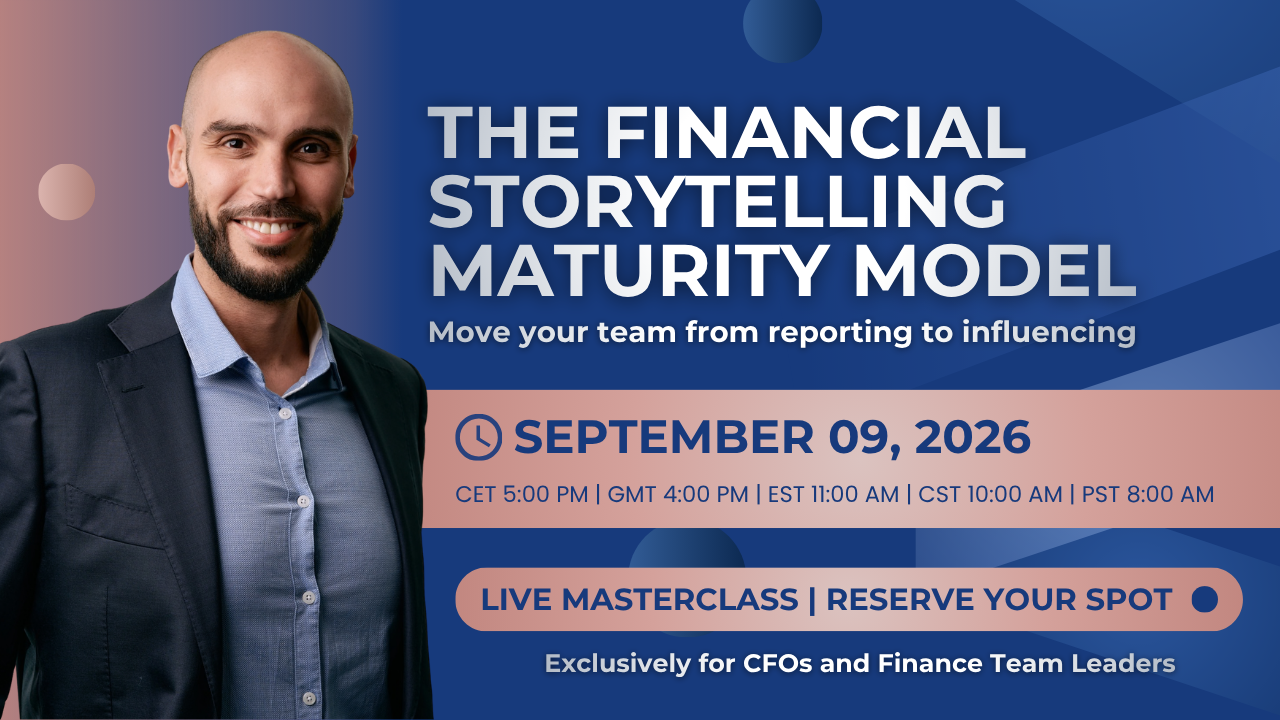
🎥 The free masterclass is back next week On Wednesday 9 September at 5 PM CET, I am relaunching my live masterclass on the Financial Storytelling Maturity Model. It answers one question I hear in almost every CFO conversation: where does your team sit today, reporting, explaining, or influencing, and what actually moves it up a level. If you want a seat, the details and registration are here: Reserve your spot 🙋 5 moves that keep a business audience with youWhat a quiet room actually costs youIf you lived your first presentations like me, you probably thought you were doing a good job because there were no questions or remarks. Then, after a certain time, when it became recurring, you thought: "maybe that's how finance presentations are"... The problem is that, often, you expect something from your audience: a decision, an action plan or maybe assumptions for your next forecast. But it won't happen if people are sleeping or thinking about something else. They did not come for the numbersIt's frustrating but there is something you absolutely have to bear in mind: no one really comes to these meetings for finance! In ExCo meetings, or even in staff meetings, Finance is the slot before the coffee break, and for a lot of them, the reputation of a boring presentation precedes us. So we have to earn a new reputation by translating what we know to the needs of each member of the audience. That translation happens before the meeting, at your desk, not live in front of them. Engagement starts before you open the deckHere's the thing: by the time you open your slides, most of the job is already done, or already missed. Knowing what each person actually owns changes how you present to them, way before you say a word. And a simple message the day before, asking one person what they think about your findings, means you have someone ready to talk when the topic comes. Because silence in a meeting almost always breaks after the first person speaks. So just make sure you know who that person will be. Five moves to increase engagementDespite all the efforts you do before, you still have to be "engaging" during a presentation. Otherwise, people will start looking at their screen, phone or think about what they'll eat at lunch. But be reassured, none of this requires a different personality. These are just habits, and you can start using them in your next meeting. 1️⃣ Be open to questions during your presentation, not only at the end. Waiting for Q&A means the audience has already checked out by the time you ask if there are any. 2️⃣ Address someone directly, with a reference to something they raised last time. "David, this connects to what you flagged in March" pulls one specific person back into the room, and the rest follow. 3️⃣ Use humour when it fits the moment (but only if you know you're good at it). 4️⃣ Keep your slide light. A dense table pulls attention onto the reading and away from you. One number and enough white space keep people looking at you while you talk. 5️⃣ Steer every discussion toward one concrete action point. A good comment that goes nowhere trains the room to stop making comments. And once you ask a real question, wait. Five seconds of silence feels long when you're the one presenting, but that's usually exactly how long it takes for someone else to decide to answer instead of you. Remote changes the physicsI got a good reminder of that during a remote training I gave just last week. On a screen, everything gets harder. Your body language is reduced to a face and two hands. Eye contact becomes basically impossible, since looking at someone means looking away from the camera. Your slides take up most of the space, and you're competing with a phone, an inbox, and whatever else is open on their second screen. And you can't read the room anymore either: no one shifting in their seat, no glances exchanged, none of the small signs that used to tell you when to slow down. That doesn't mean you give up on engagement. It means you compensate, on purpose: 1️⃣ Look at the camera when you speak, even though the instinct is to watch your own face in the corner Final Thought A meeting can go well and still change nothing. If everyone nodded and nothing moves after, that energy was wasted on you. None of the moves above are complicated. A name, a pause, a question asked at the right moment. What's hard is remembering to use them when you're also busy defending your numbers. Hit reply and tell me about a meeting where you realised, too late, that people had checked out. What did you do right after? I read every message and reply to all of them. That's a wrap for this week See you next week! P.S. After 17 years in FP&A, Consulting and Leadership, I’ve coached and trained finance teams across industries, from consulting and manufacturing to tech, media, and global logistics. If you want to sharpen your own storytelling skills or bring this work into your team, here are a 3 ways can work together:
If you're unsure which option fits best, reply to this email. I’ll point you in the right direction. |